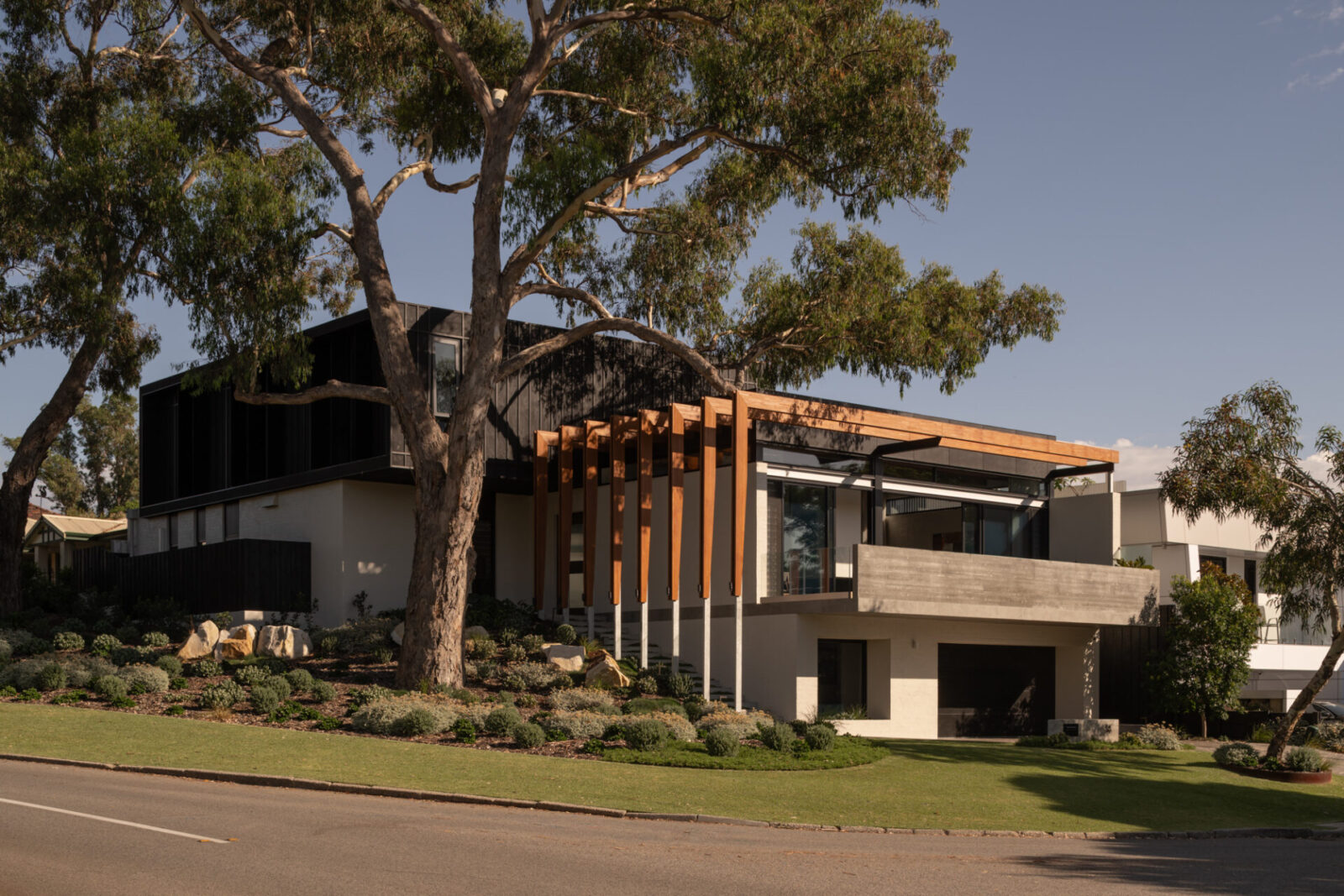
Euclayptus House
2024
LOCATION: Bayswater, Perth
BUILDER: Formview Building
ENGINEER: Cenit Engineering
ENERGY CONSULTANT: The Study
LANDSCAPE ARCHITECT: Tristan Peirce
FURNITURE: Robeson Architects
PHOTOGRAPHY: Dion Robeson
LOT SIZE: 467m2
HOUSE SIZE: 384m2
ZONING: R25
SETTING THE SCENE
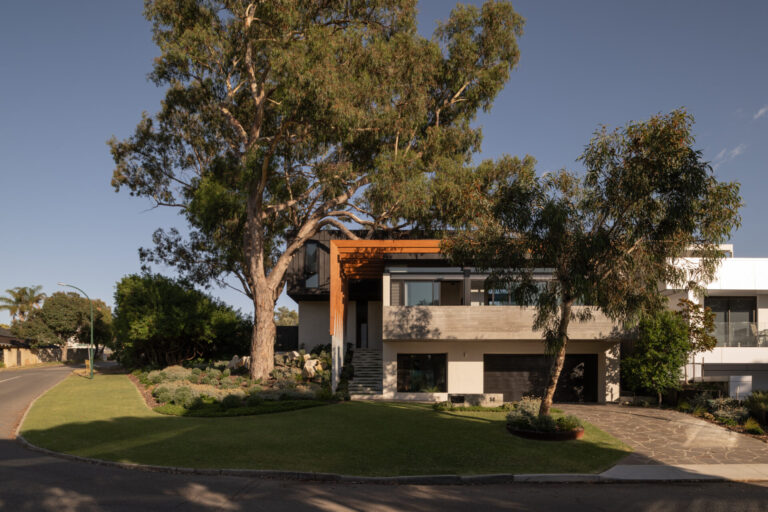
The brief called for a six-bedroom home that responded carefully to established eucalyptus trees and challenging site conditions whilst framing southern views across the park. Having lived on the property for several years, the owners brought an intimate understanding of it’s best outlooks, the sunlit pockets and favourite corners. These lived insights helped shape the backbone of the design response.
FRAMING THE LANDSCAPE
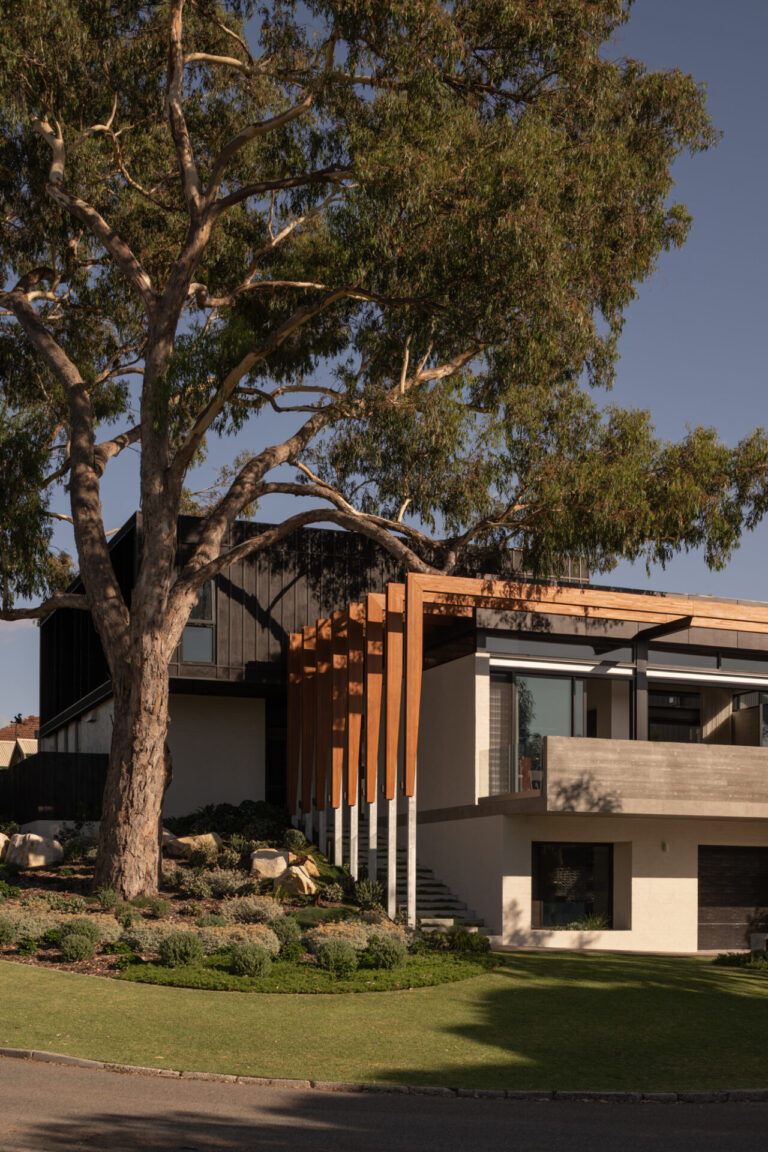
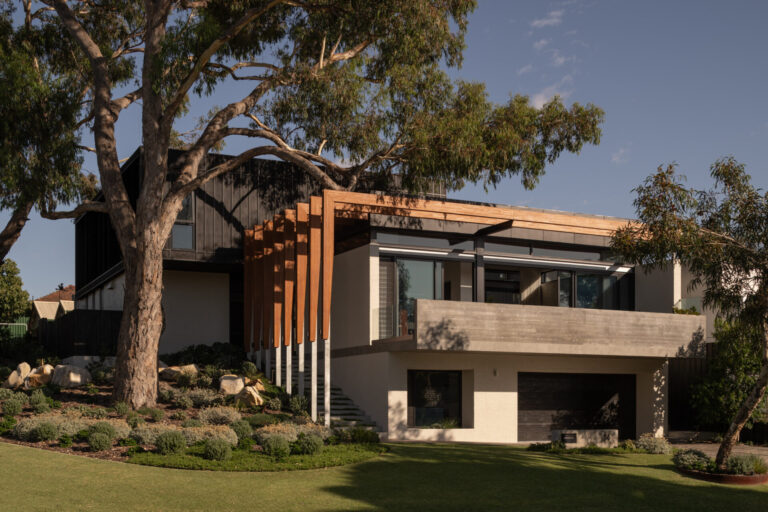
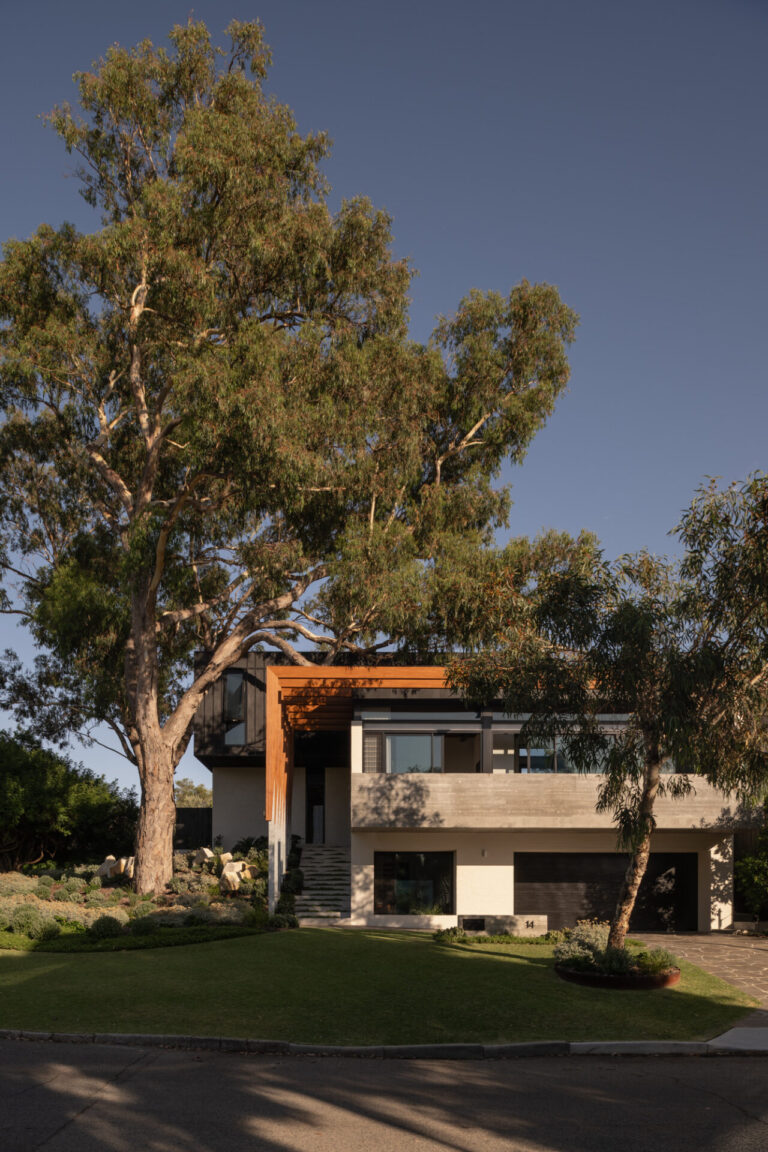
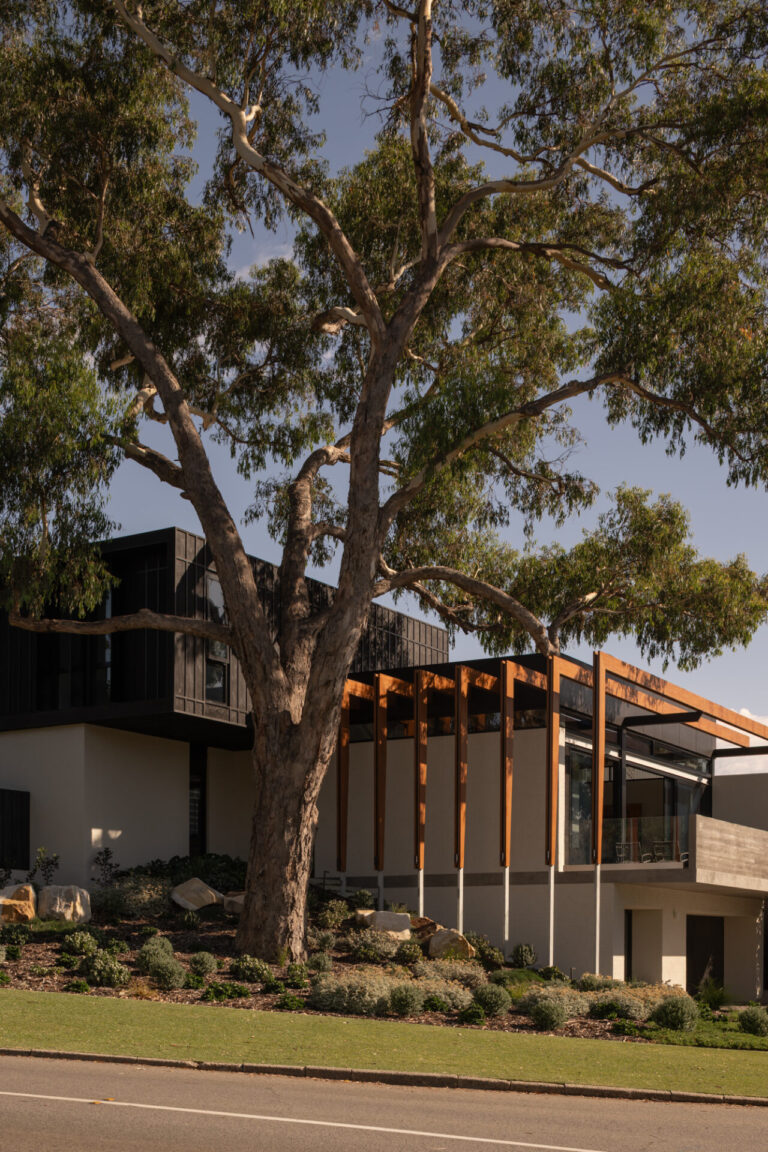
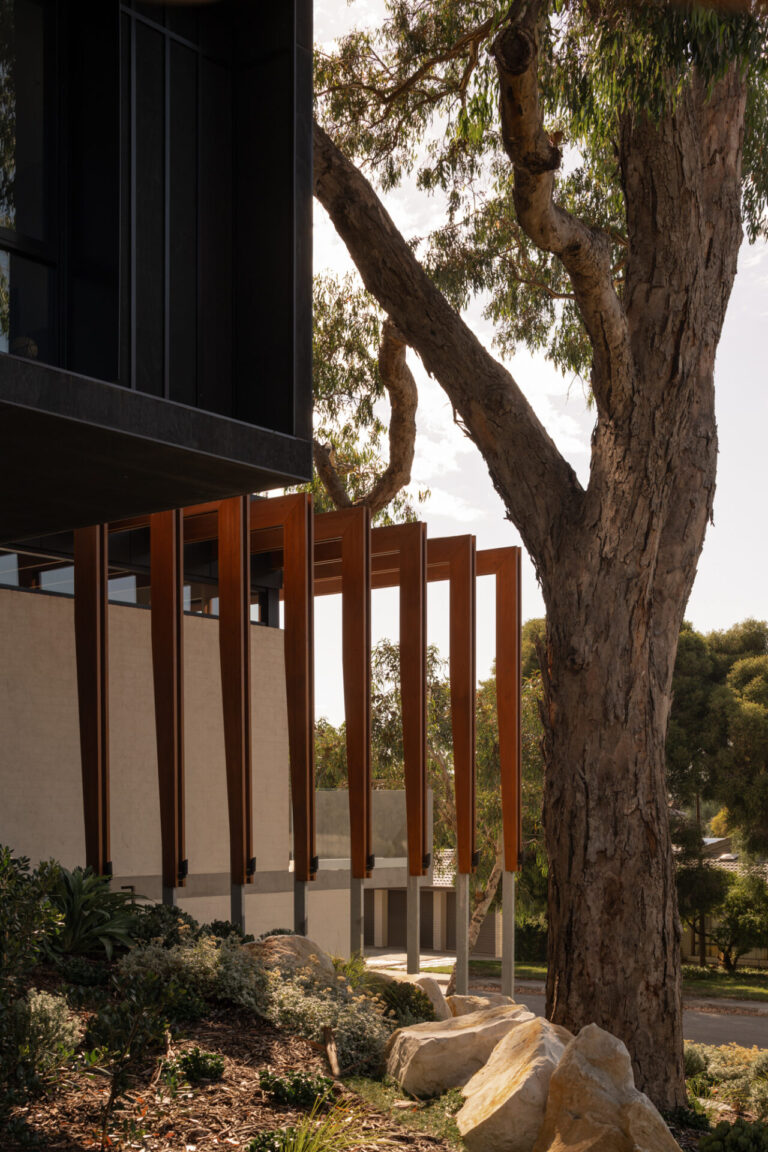
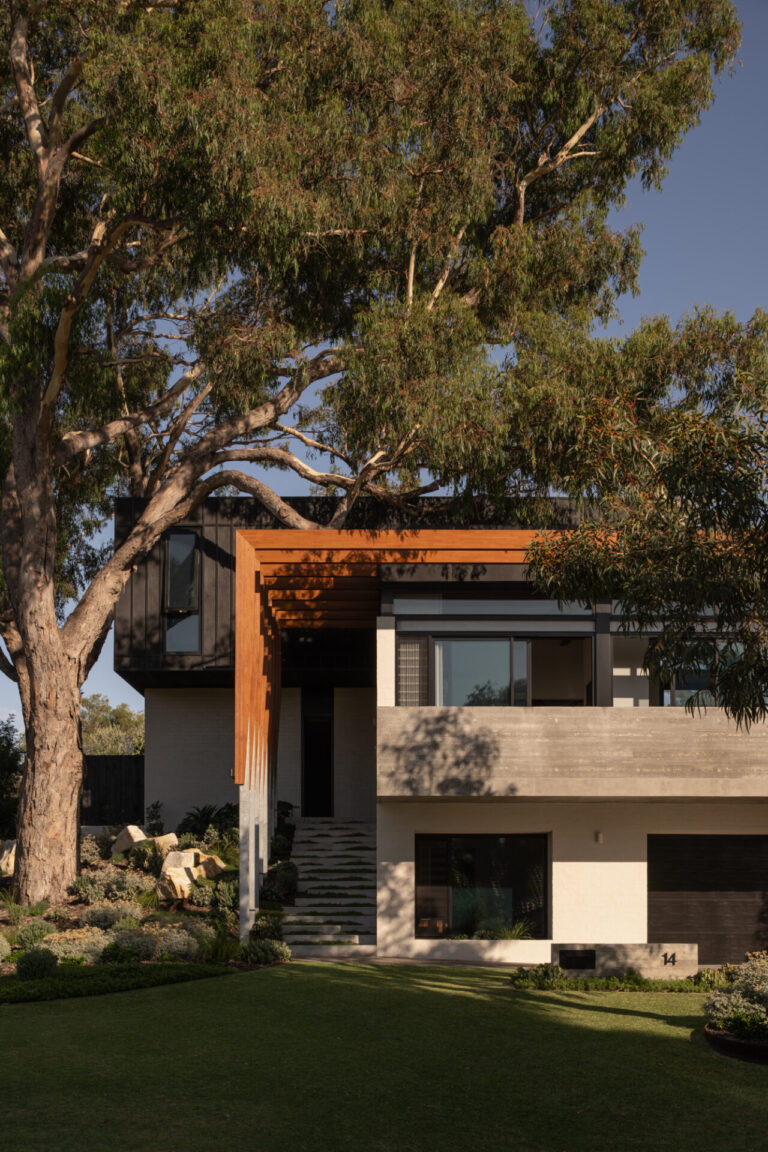
True to it’s name, the project was defined by two mature eucalyptus trees that shaped both the site and architectural response. From the outset, their preservation was non-negotiable and the challenge lay in designing around them. Before we put pen to paper, an arborist was engaged to assess their health and establish any build setbacks, clarifying how closely the house could sit without compromising the root zones.
WORKING WITH THE SLOPE
Beyond the trees, the site presented a fall of more than five metres from rear boundary to the street. Rather than resist the gradient, the design worked with it. Floor levels were carefully calibrated to negotiate the natural topography, allowing the undercroft garage to be integrated into the slope without excessive excavation or a sloping driveway. Working with the terrain not only reduced site impact, but also protected the established tree’s root system and allowed the home to sit comfortably within it’s surroundings.
SPATIAL RESOLUTION
Accommodating a generous six-bedroom home on a modest block while retaining a generous garden for the children to play required a disciplined approach. Early studies explored stacking and shifting simple rectilinear volumes across the site, testing their relationship to the slope and tree protection zones. Once the home’s form was resolved, the interior was arranged to ensure circulation felt effortless and spaces flowed naturally.
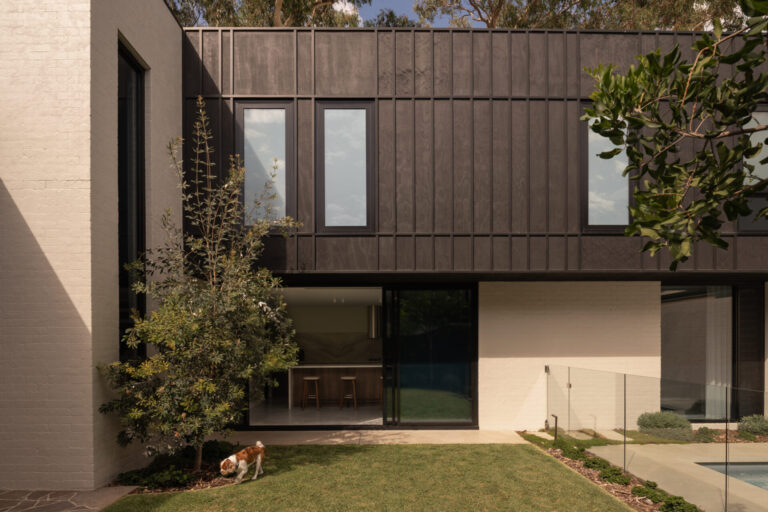
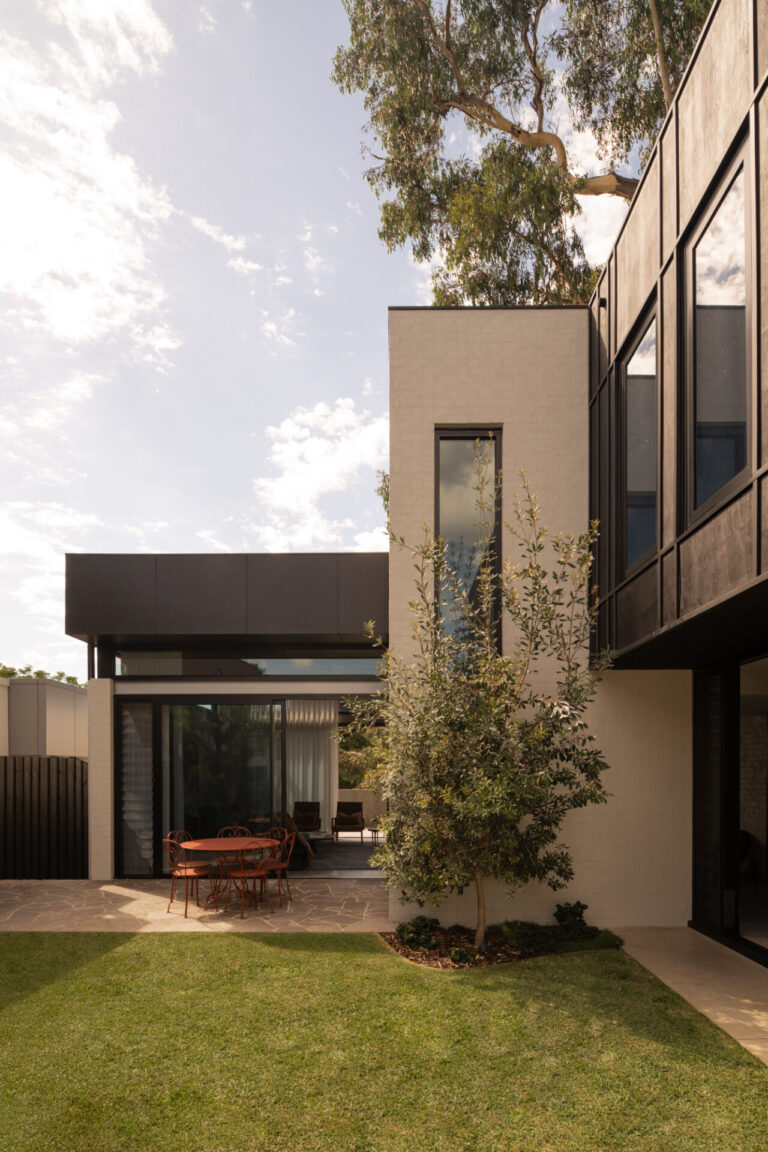
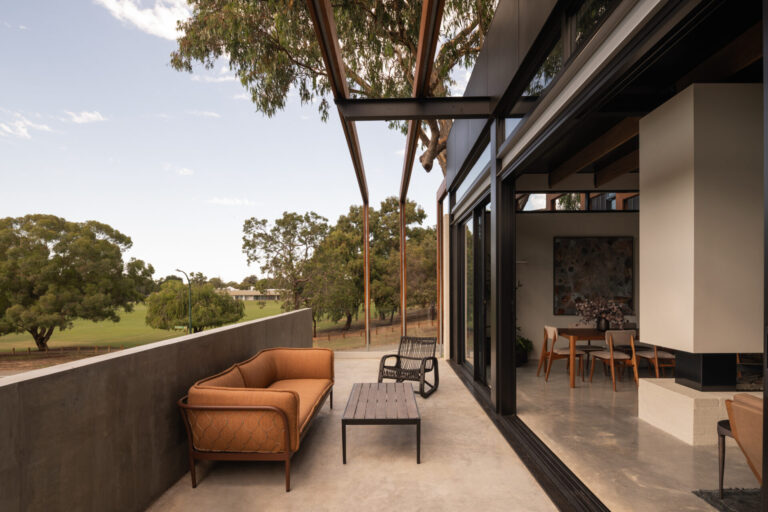
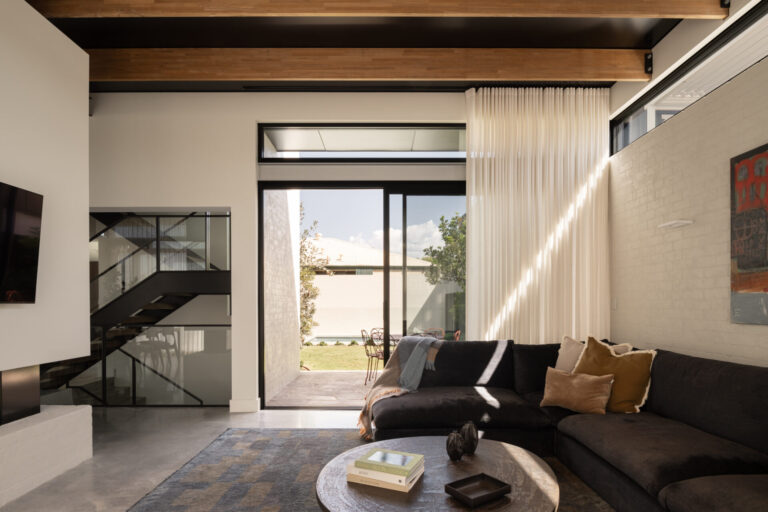
Spanning three levels, the design minimises transitional spaces in favour of light-filled, connected living areas that open to the landscape. Four interlocking volumes define the final design with living spaces positioned above the undercroft garage and bedrooms stacked over the kitchen and service areas. Placing the bedrooms at the rear kept the main living zones free from any overhead structure, creating generous ceiling heights and a heightened sense of openness. A raised roof over the lounge and dining areas introduced high-level glazing on all sides, framing the tree canopy and park outlooks beyond.
PASSIVE DESIGN
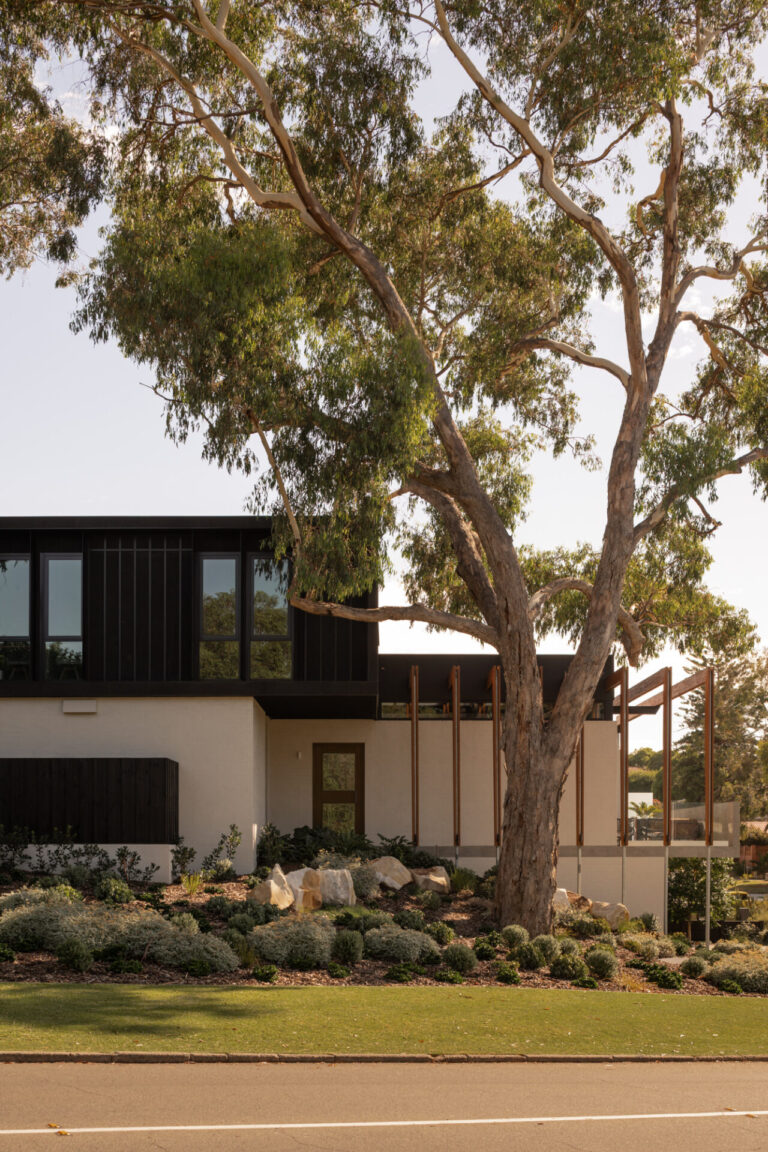
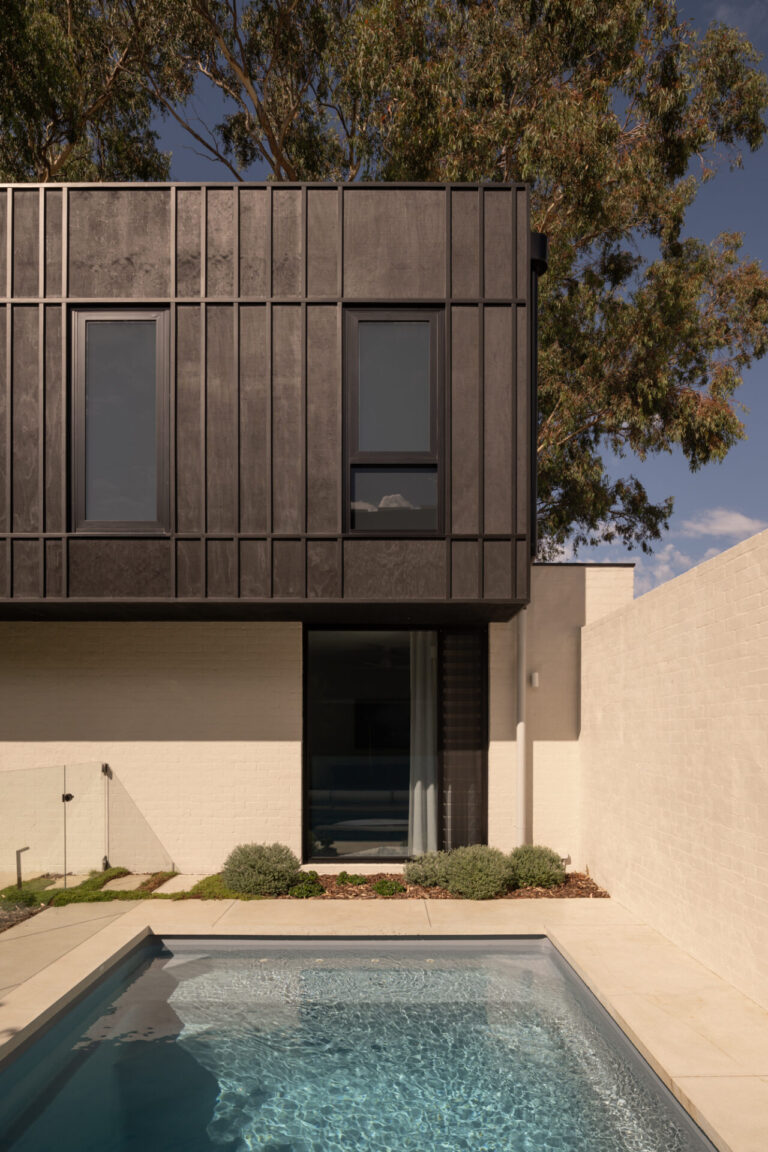
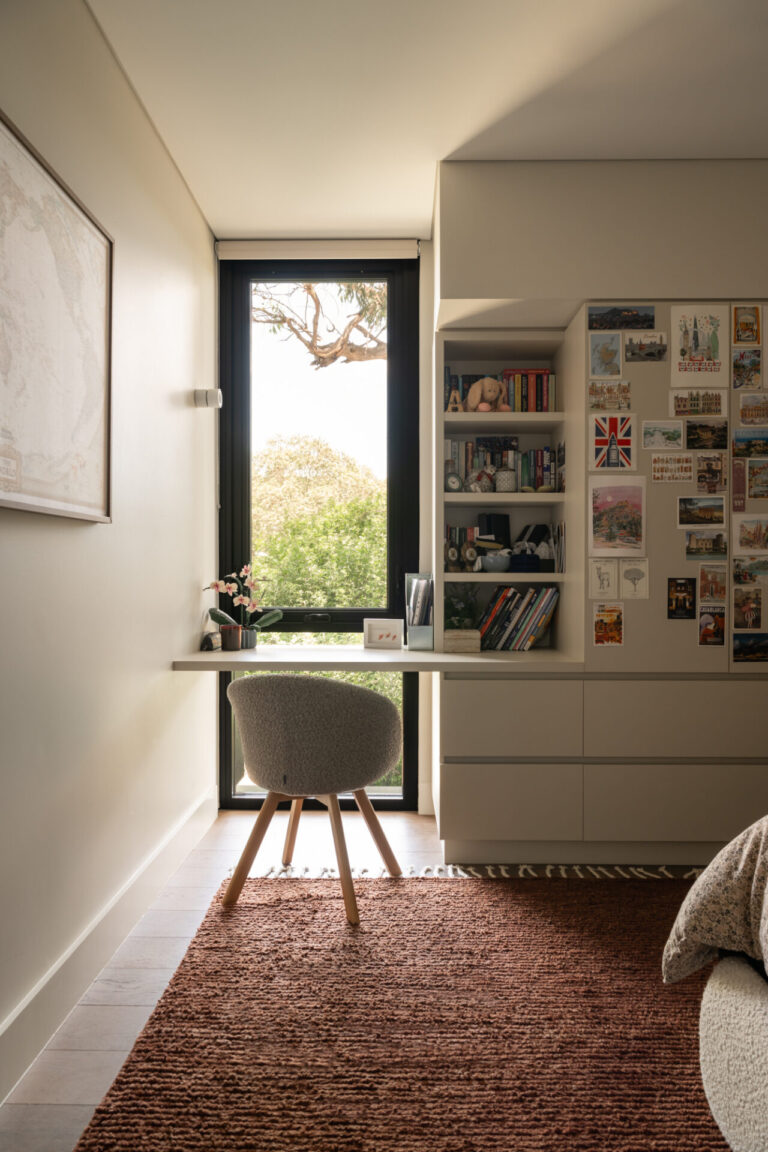
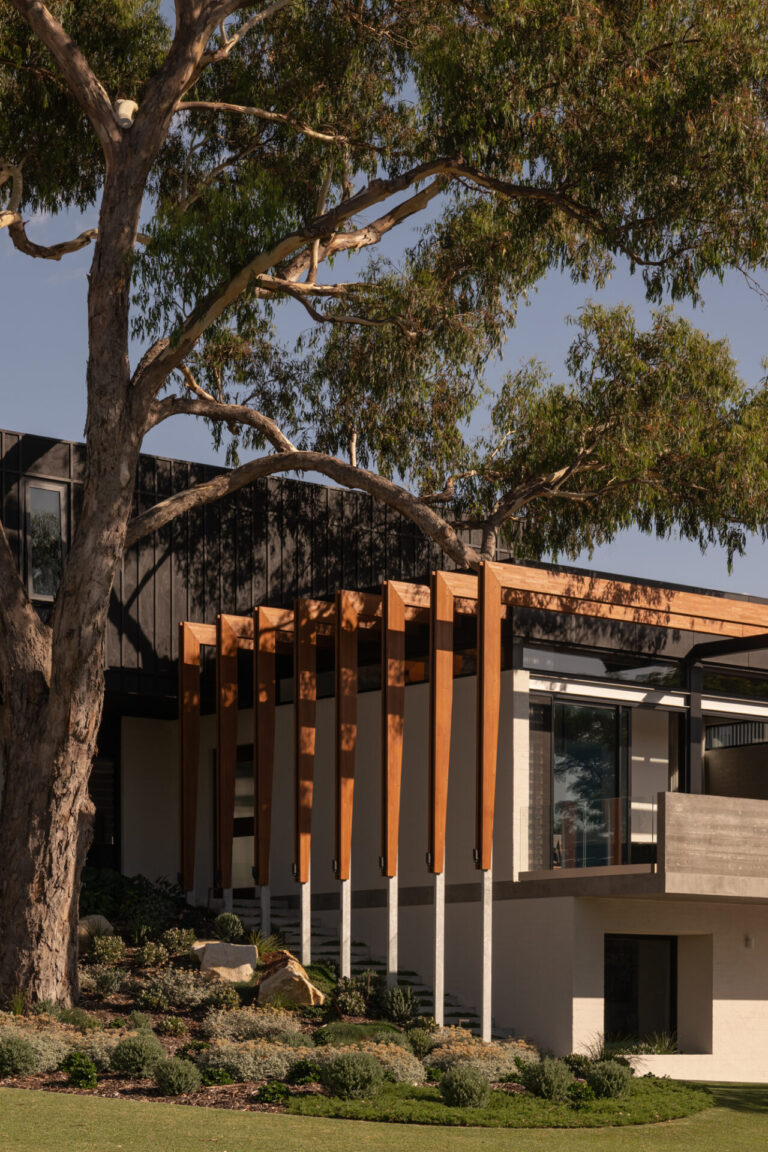
With extensive glazing throughout the home, particularly in the main living areas that open to the landscape, double glazing was specified to maintain thermal comfort year-round. Upstairs, the southwest-facing children’s bedrooms were thoughtfully designed with the shading of the trees in mind while vertical aluminium fins provide additional measured sun control and introduce subtle depth to the façade.
MATERIALITY
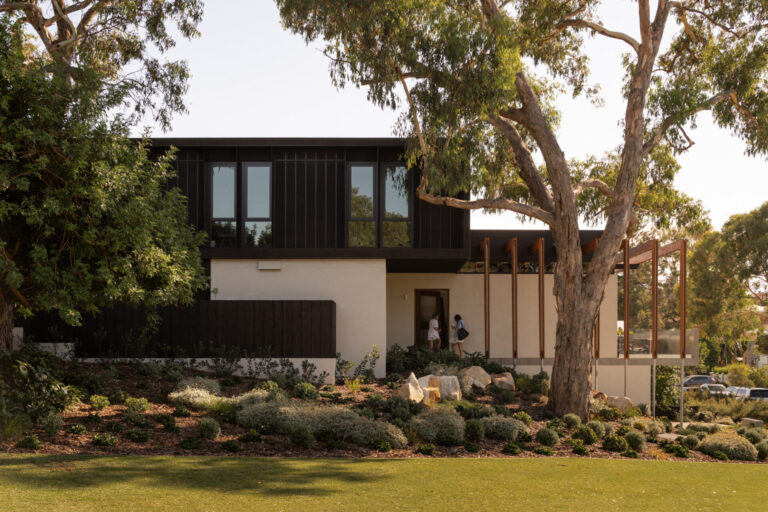
Brick, timber and concrete were chosen for their simplicity and ability to ensure the structure was of it’s place. The aim was to balance clean, contemporary form with the established Bayswater vernacular so that the home felt grounded rather than imposed.
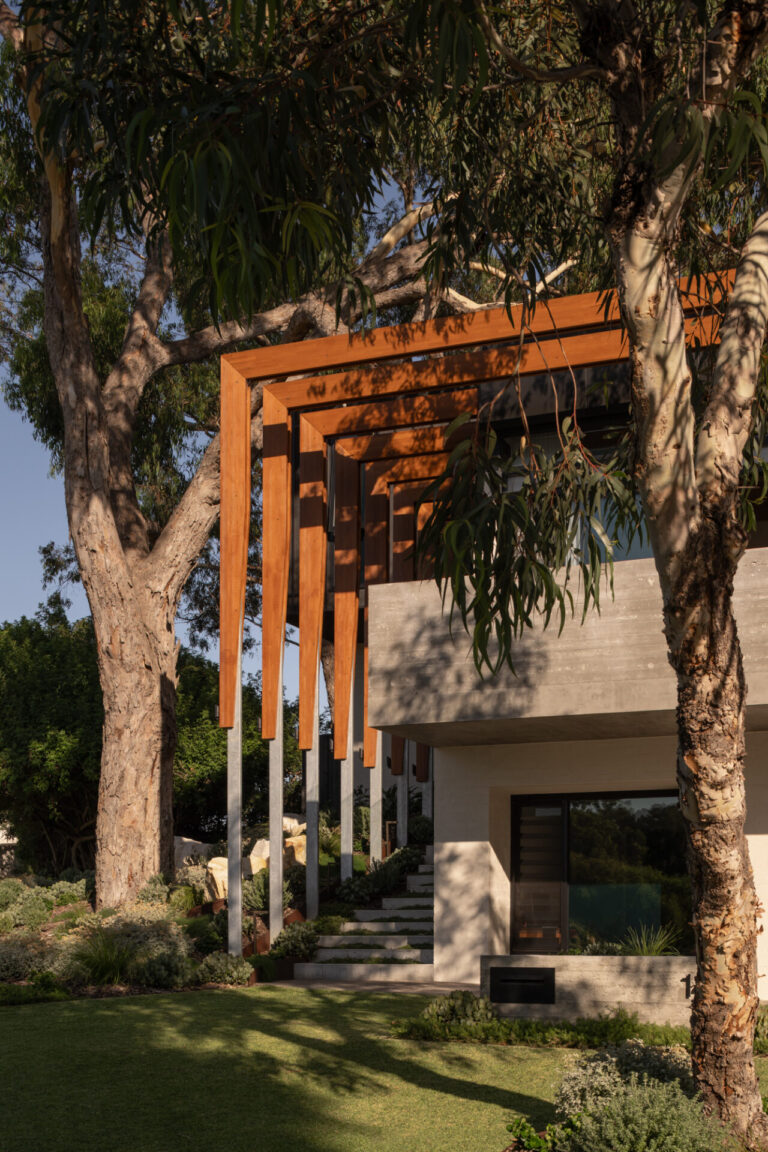
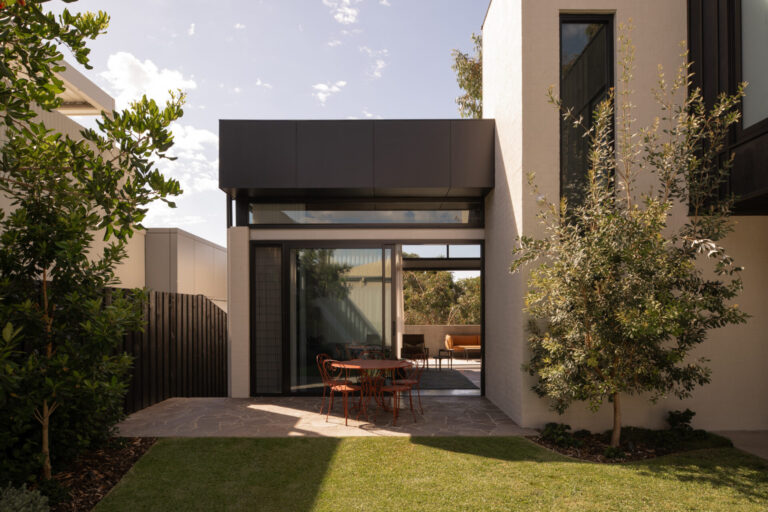
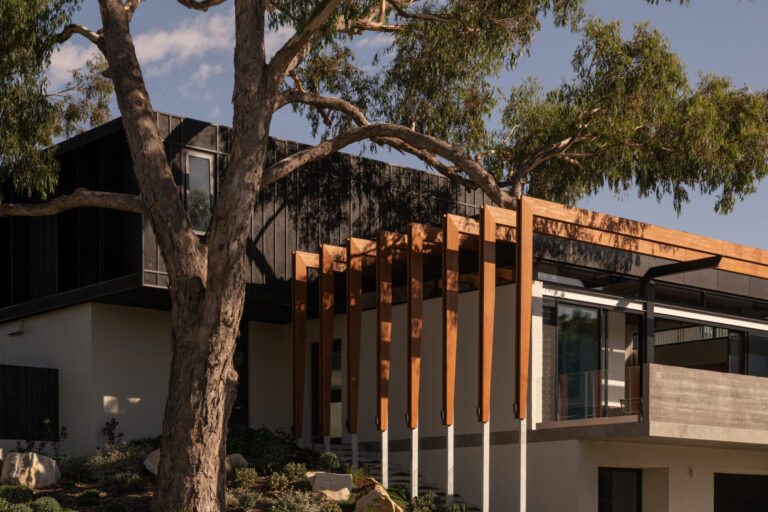
Black-stained plywood cladding wrapped the upper level, receding into the green canopy backdrop, while spotted gum beams framed the entry paying homage to the trees that shaped the site. Below, bagged and tumbled brickwork anchored the ground floor in robust finishes, while off-form concrete shaped the balustrade, it’s board-marked texture adding a crafted tactile quality.
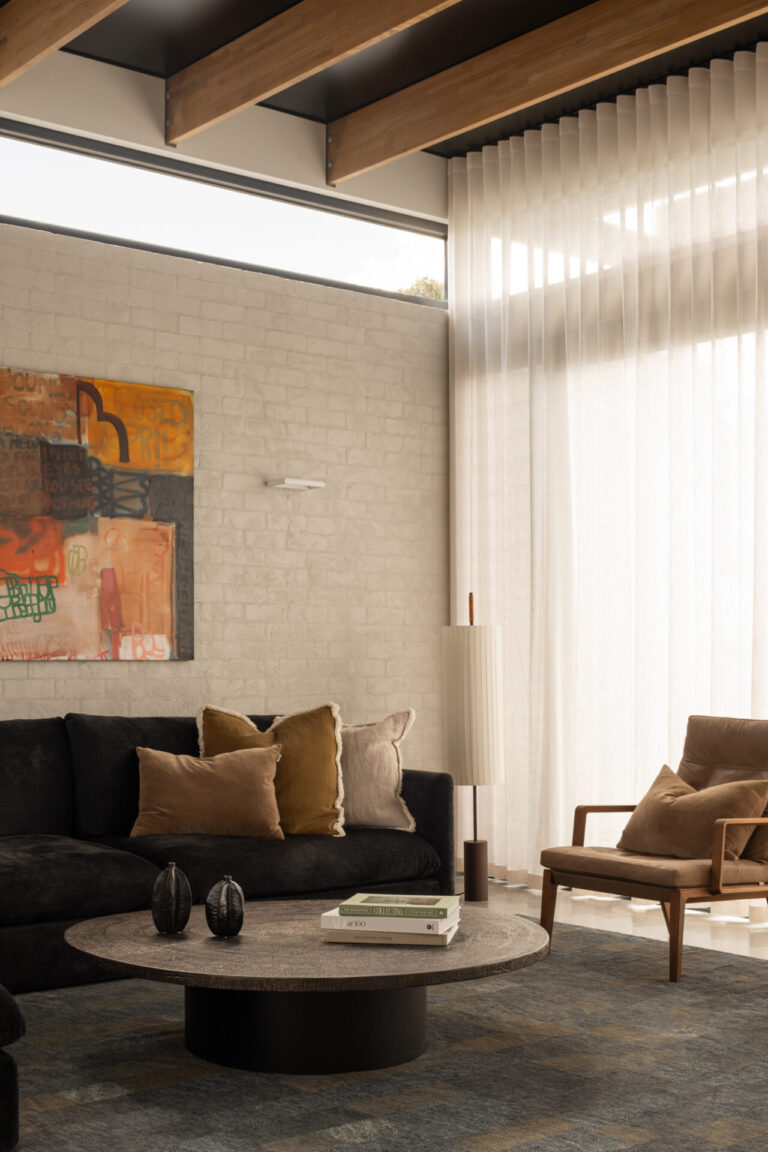
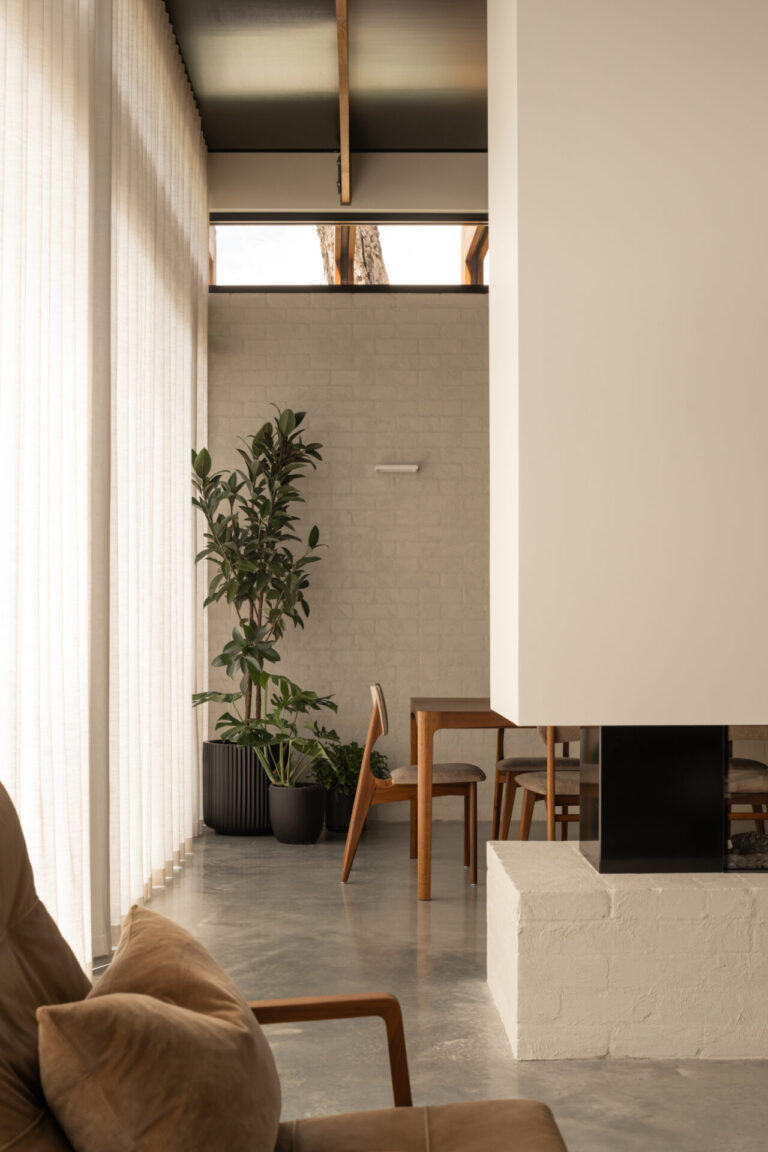
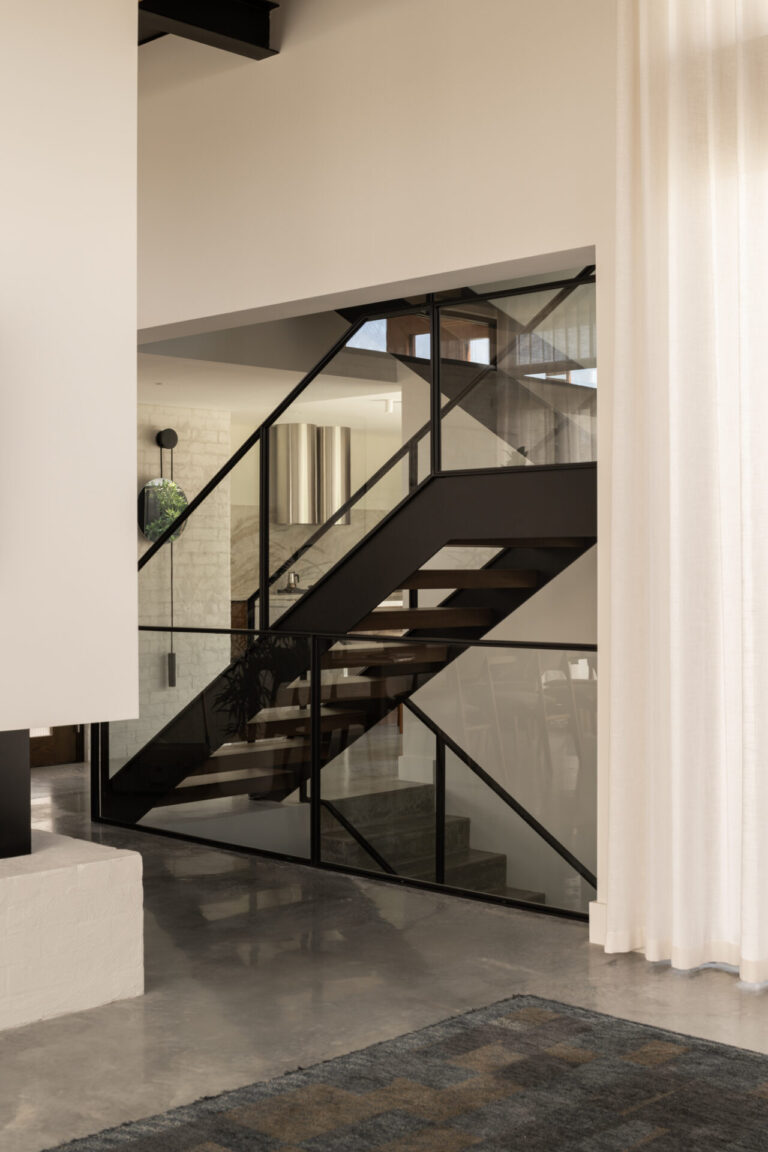
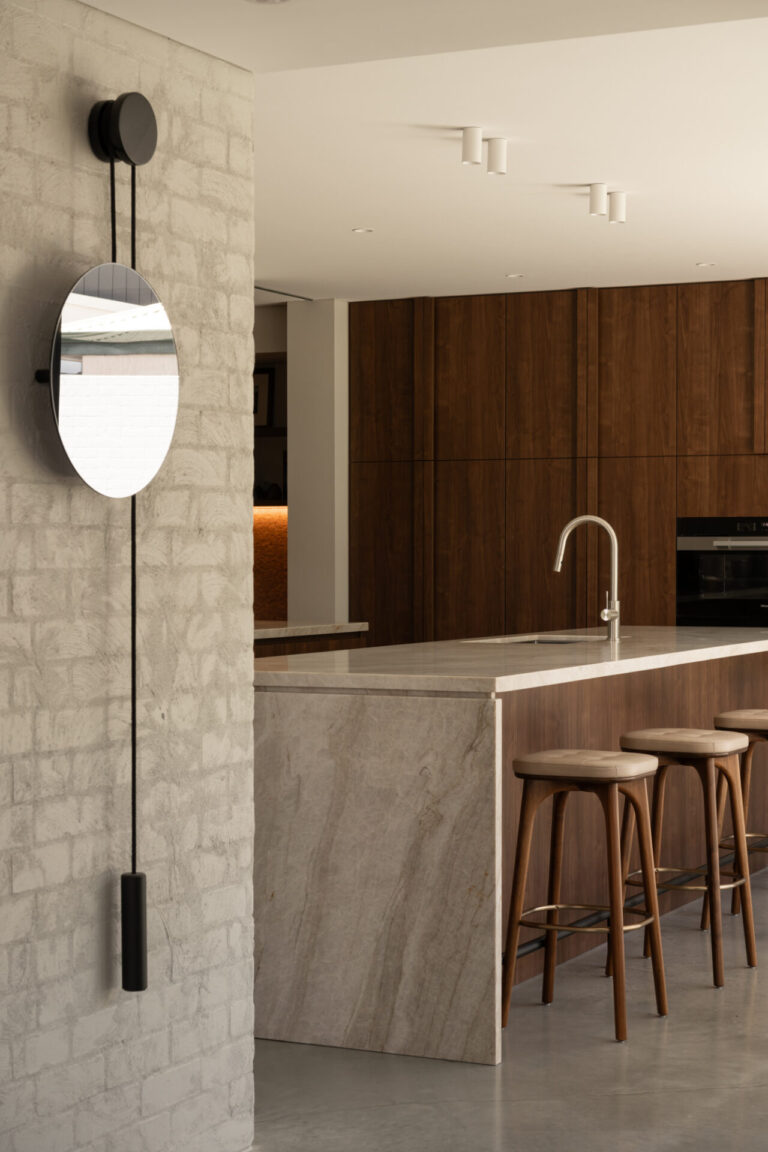
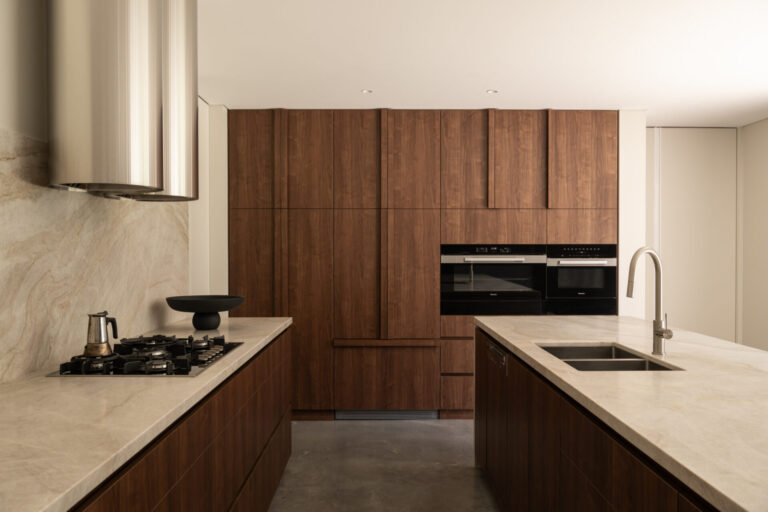
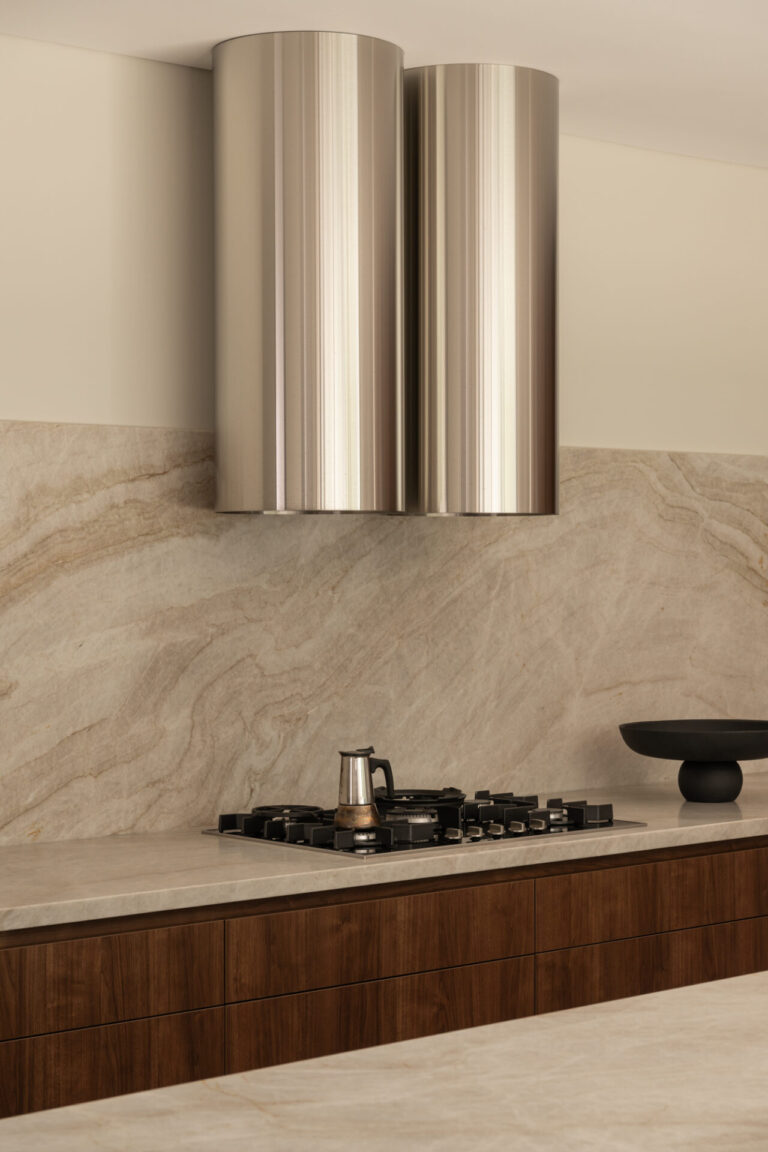
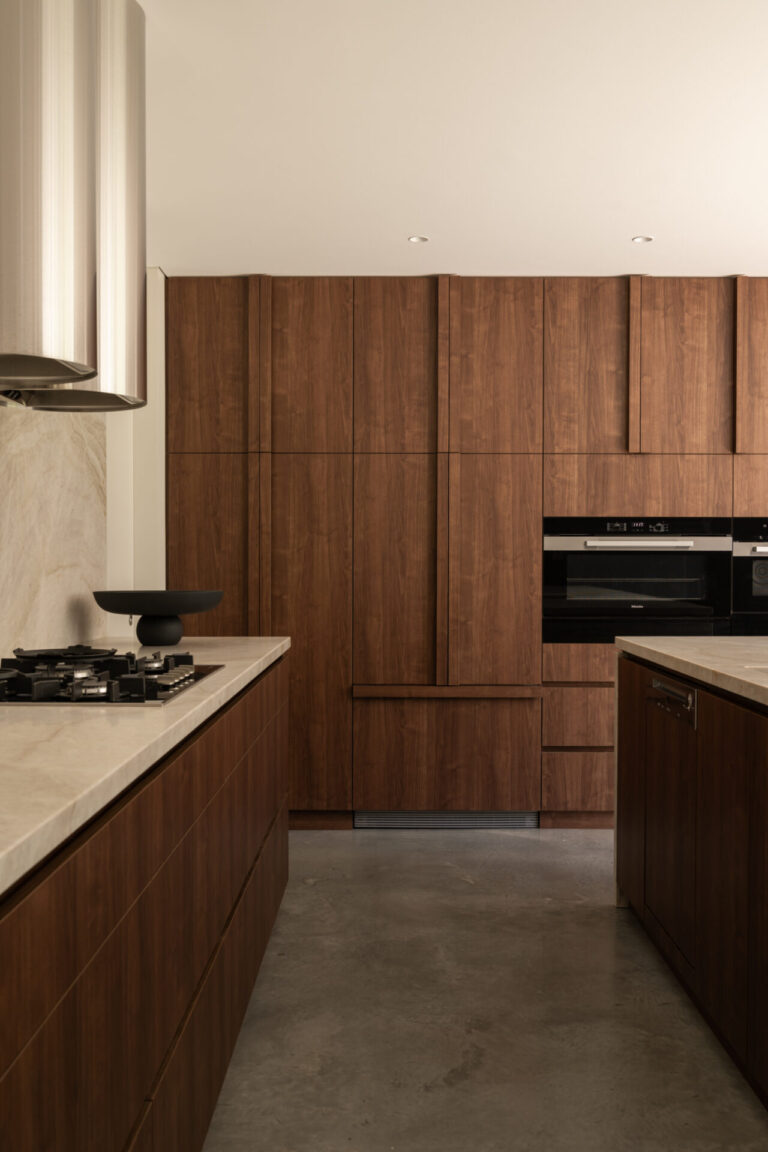
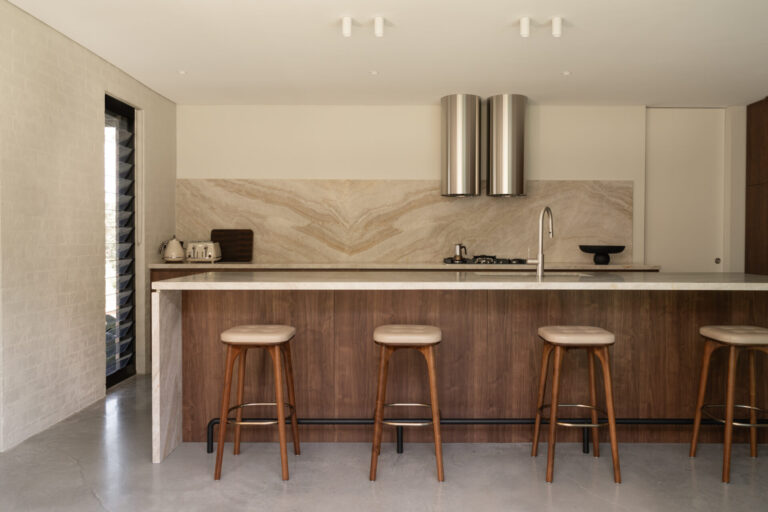
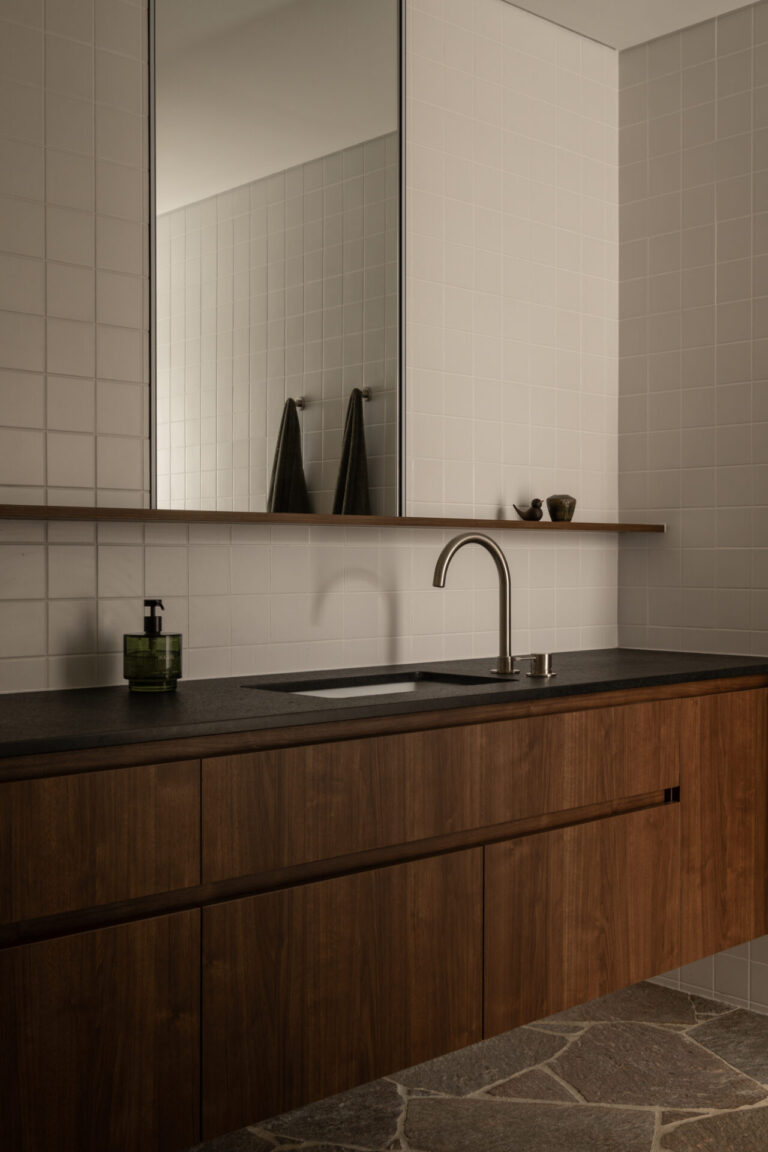
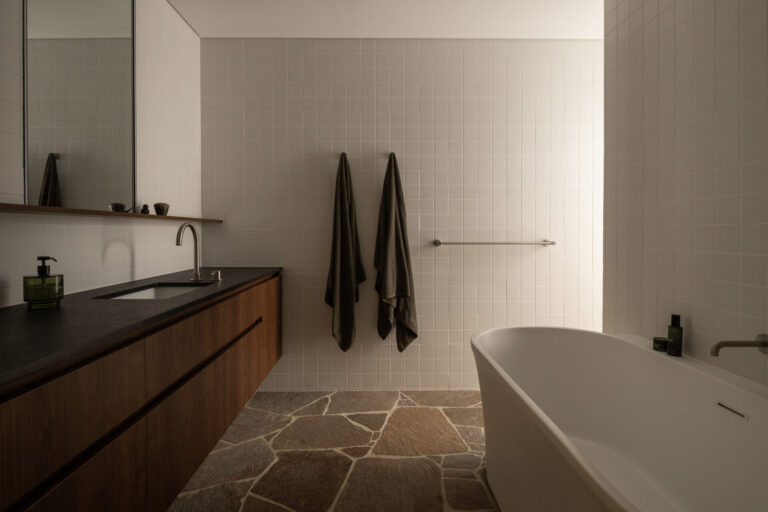
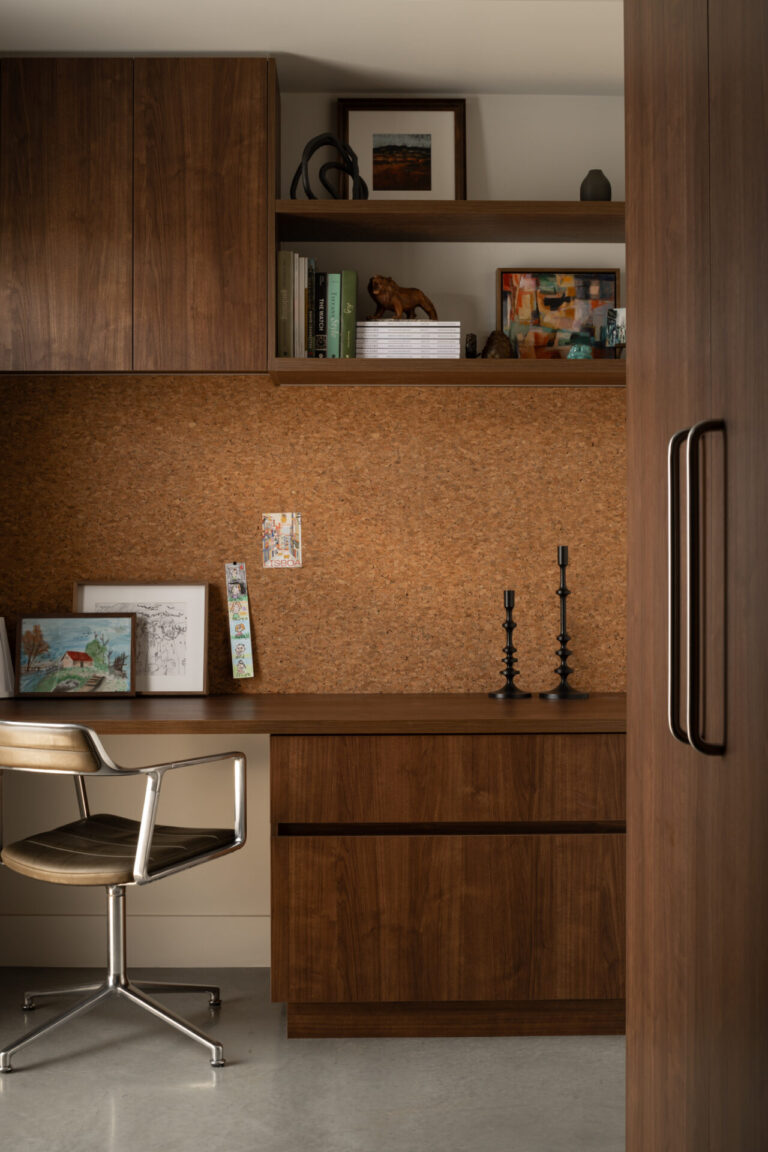
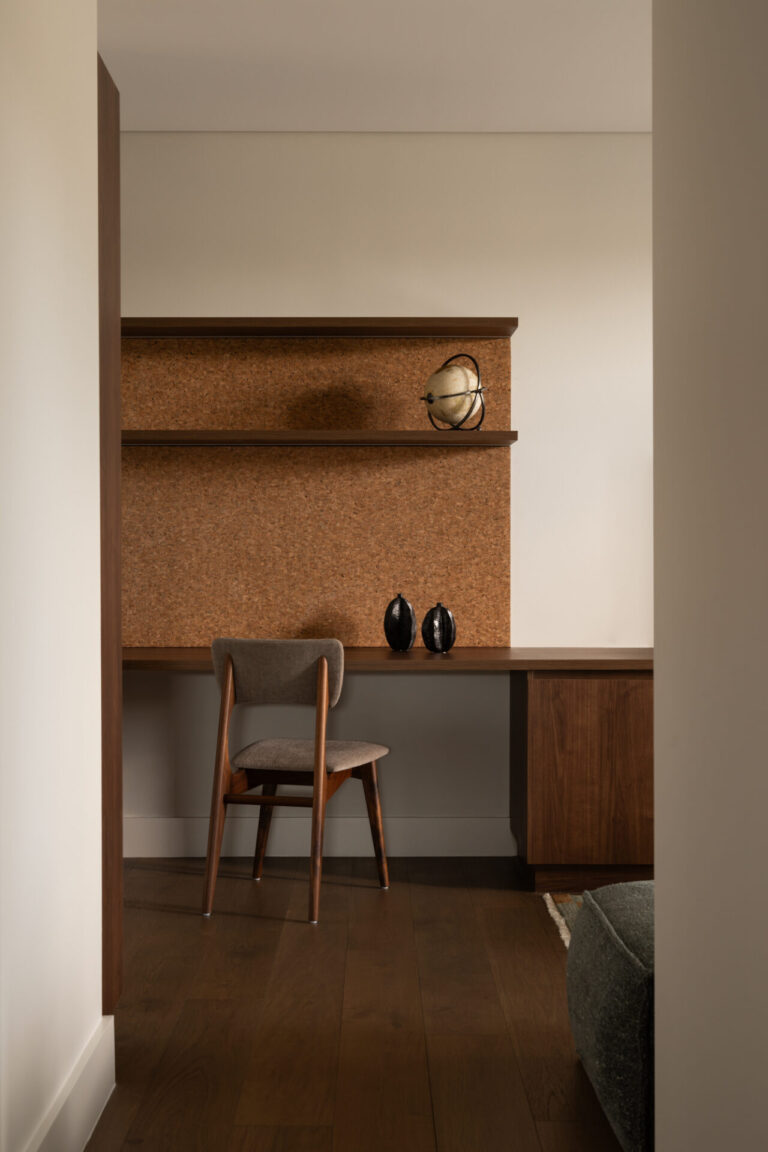
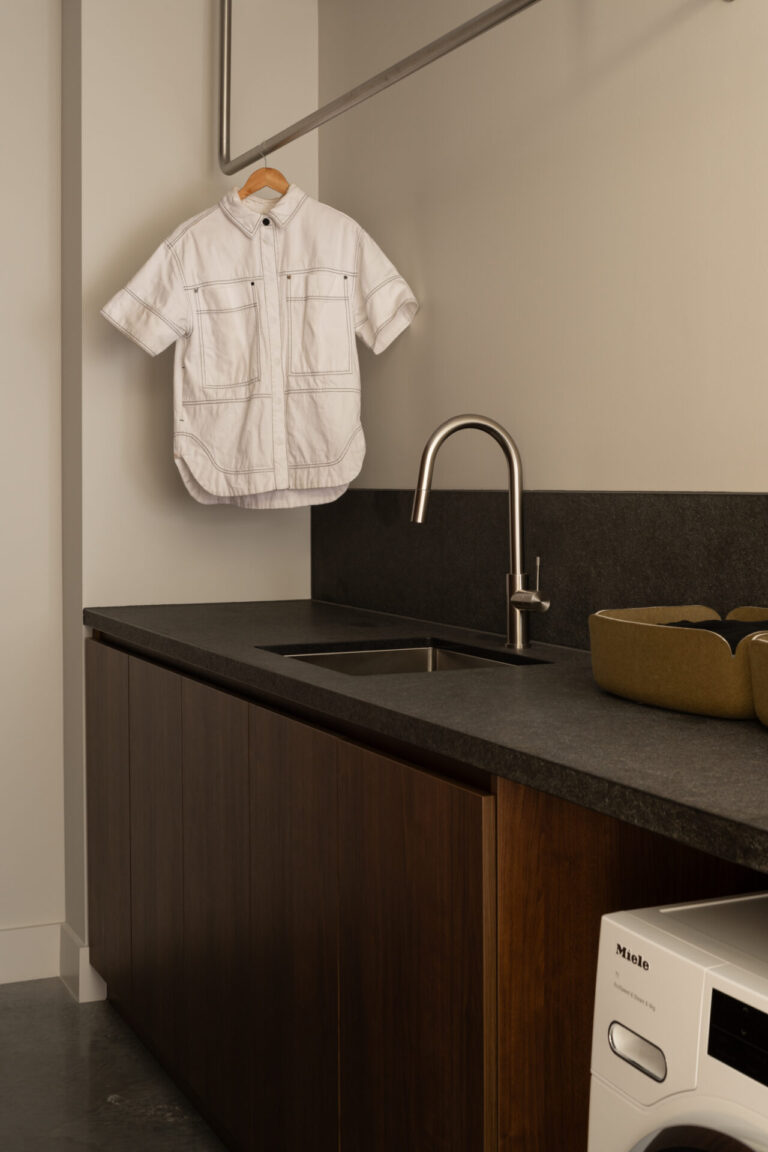
Material consistency remained central to our approach, tying interior and exterior together both visually and in how the spaces felt. Stone crazy paving extended through the driveway and outdoor entertaining areas, softening the transition between house and garden and also re-appearing in the master suite. On the ground floor, polished concrete referenced the exterior structure, while spotted gum flooring and cabinetry echoed the external timber beams and brought warmth to the upper level. In the main living areas, bagged brickwork continued and black plywood returned, reinterpreted as a high-gloss ceiling lining that offered a refined counterpoint to it’s matte exterior finish. The result was a cohesive material language that blurred the boundary between inside and out.
MORE THAN MEETS THE EYE
Good design works hard. Where possible, elements were designed to perform more than one role, reducing visual clutter and allowing the architecture itself to do the heavy lifting.
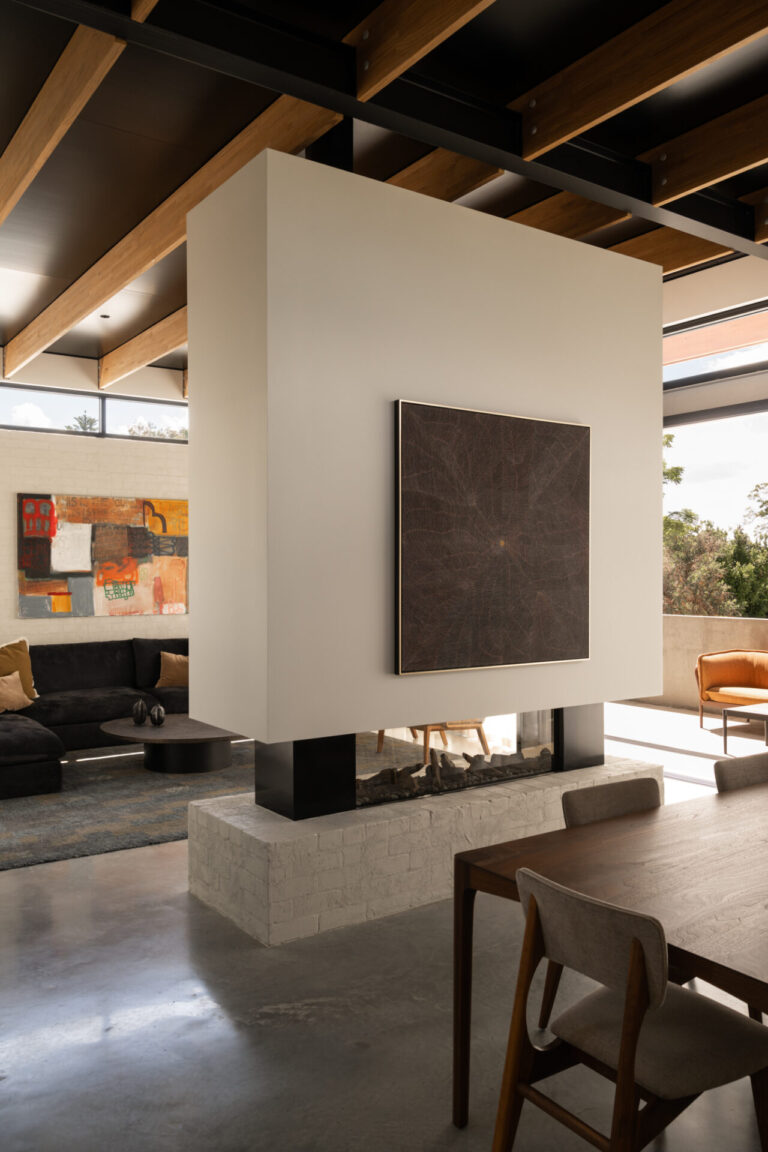
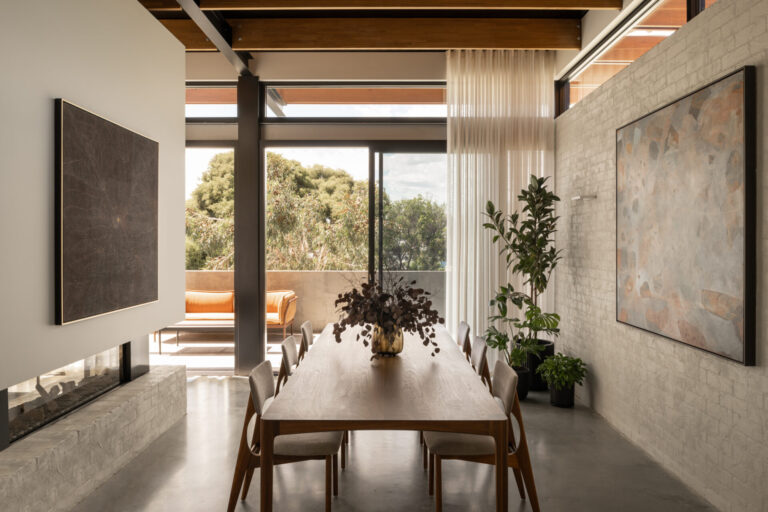
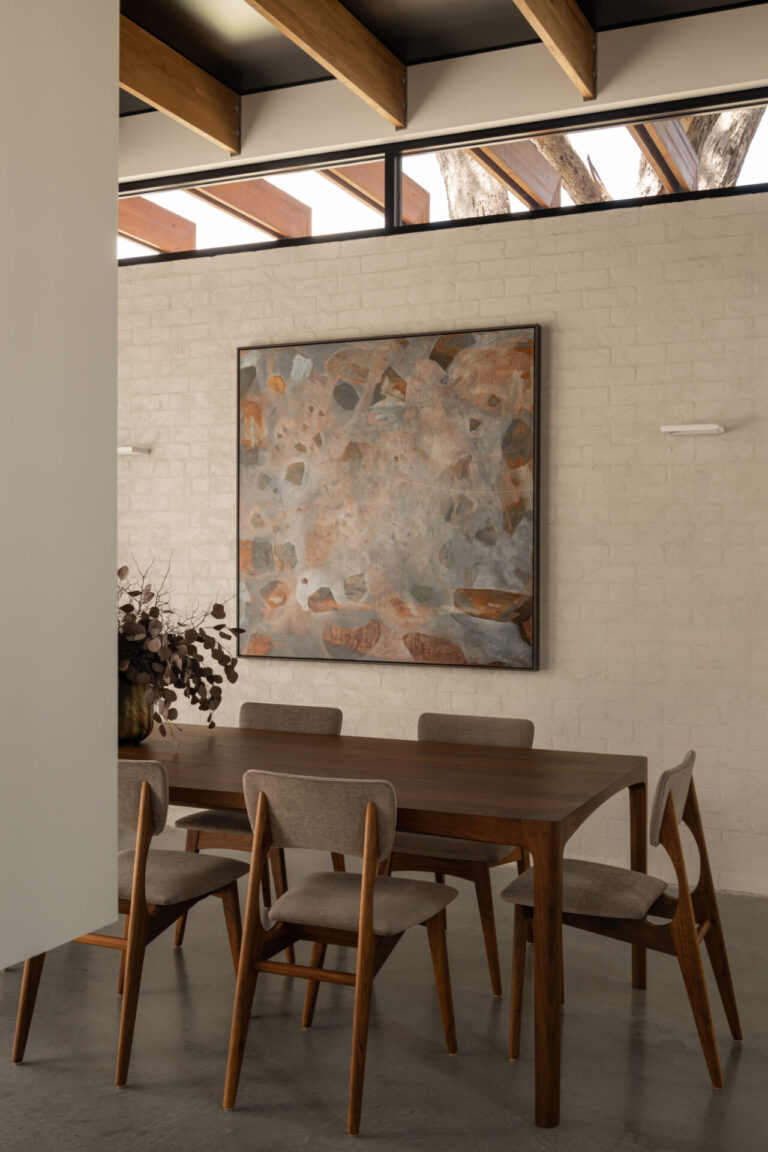
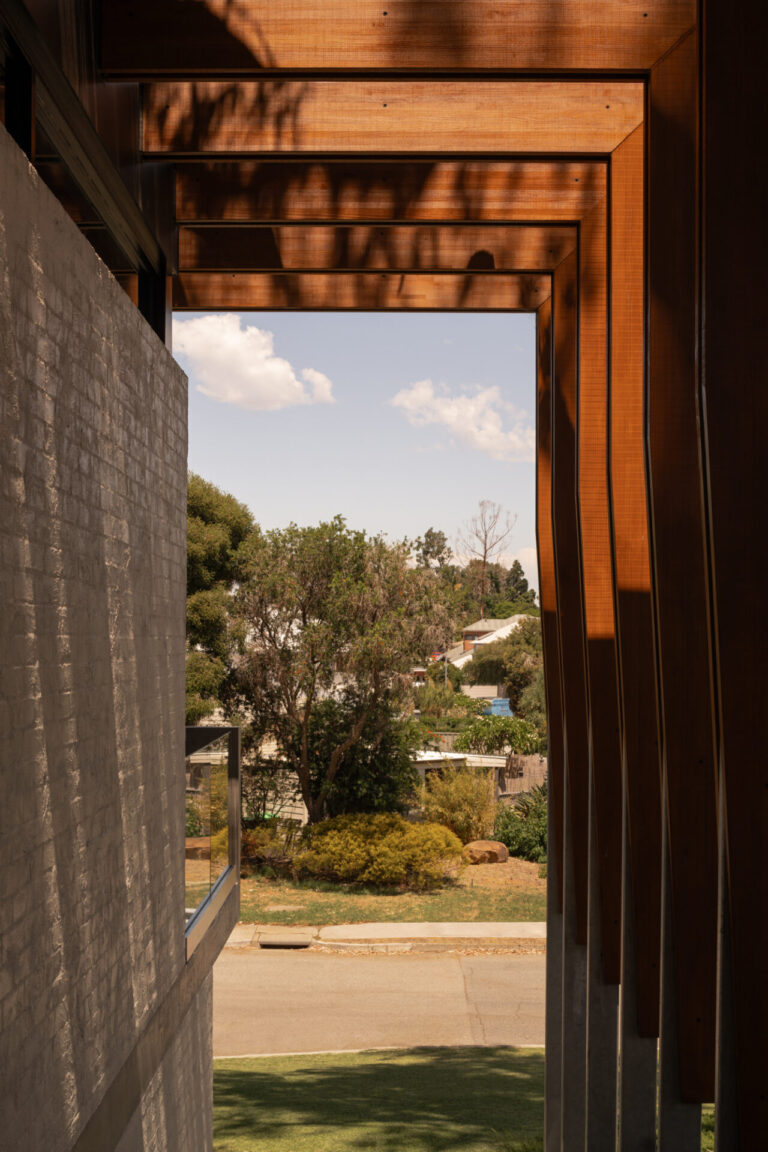
The exposed spotted gum beams supported the roof structurally while forming a subtle arch over the entry steps, clearly defining the approach to the home. Inside, the fireplace acted as both anchor and divider, creating a separation between dining and lounge areas without enclosing either. It also provided both a solid backdrop for artwork in the dining area and a practical mounting point for the TV in the lounge.
THE FINISHING TOUCHES
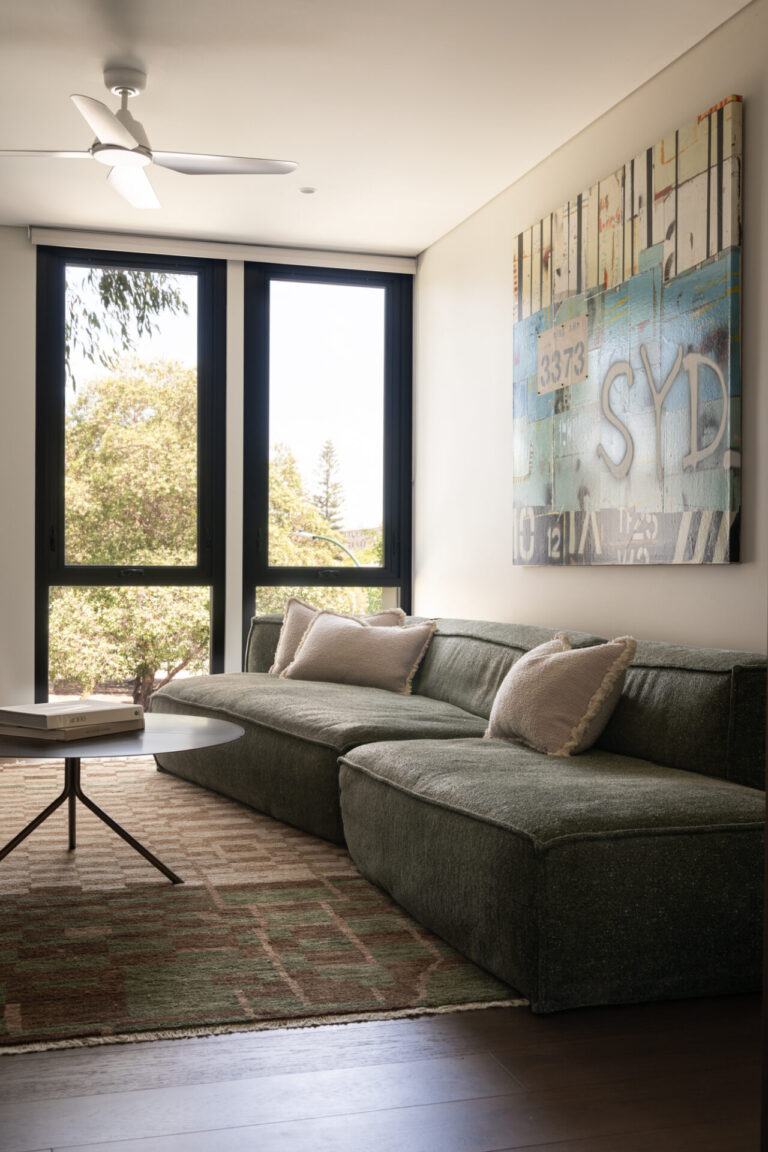
We were engaged not only for the architectural design, but also for the selection of furniture, artwork, and decorative pieces, allowing the material story of the home to carry through to the final layer. Collaborating with local furniture designer Nathan Day, we developed custom pieces specifically for the home’s palette and proportions. Through Linton & Kay, we curated a collection of artworks, trialling different pieces within the space and ensuring each piece complemented the architecture and atmosphere before final selections were made. Being involved beyond the design allowed the house to evolve as a complete environment rather than simply a finished structure and we are now offering this service to all future clients.